


In 2026, the UK media industry has moved past the "AI experimentation" phase and is now in a "structural rebuild." For IT companies and consultancies, the sales landscape has shifted from selling tools to selling operational resilience and revenue recovery.
The timing adds complexity. The European Union adopted its AI Act in March 2024, creating extra-territorial compliance requirements for UK media distributing content into EU markets.
Meanwhile, the UK government pursues a “pro-innovation” approach through sector-led regulation involving Ofcom, the ICO, and the CMA. And since late 2022, generative AI has moved from research curiosity to operational reality faster than most organisations could adapt.
As Future Processing - a technology consultant and software delivery partner for media & advertising - we examined what companies in this sector aim to achieve with AI. And while their needs differ, AI remains a flexible tool that, when used well, helps organisations support their broader business goals.
Challenge #1: The data dilemma – turning analytics into decisions
Many British media firms possess decades of archives and audience data, but these are often trapped in fragmented legacy systems. The challenge is making that data useful for AI.
Breaking down data silos in legacy media houses
Consider a typical UK broadcaster. Audience viewing data sits in one system. Archive metadata lives in another. Social engagement metrics come from third-party platforms. Content rights information exists in spreadsheets and contracts.
For AI systems to deliver value, they need access to clean, connected data. But cleaning and connecting data from decades of different formats, vendors, and standards requires significant investment before any AI benefit materialises.
The organisations that struggle most are those with the richest archives – exactly the content that could generate the most value if properly accessible to AI tools.
Predictive vs. descriptive analytics
UK media organisations have historically excelled at descriptive analytics: understanding what happened, who watched, which content performed.
The shift to predictive analytics – forecasting churn, anticipating content preferences, enabling real-time personalisation – requires fundamentally different data infrastructure and skills.
GDPR and audience trust
UK GDPR creates both barriers and opportunities for AI analytics. The rigorous approach to data privacy limits certain personalisation techniques, but it also provides a framework for building public trust.
Consent:
- Challenge: Obtaining valid consent for AI-driven personalisation
- Practical response: Clear, granular consent mechanisms
Legitimate interests:
- Challenge: Balancing business needs with user expectations
- Practical response: Documented assessments and opt-out options
Data retention:
- Challenge: Keeping audience data only as long as necessary
- Practical response: Automated deletion policies tied to AI training cycles
Transparency:
- Challenge: Explaining how AI uses personal data
- Practical response: Plain-language notices about recommendation engines
Media leaders need cross-functional AI governance spanning editorial, legal, technology, and commercial teams.
Consultancy partners like Future Processing help design operating models that connect data strategy with compliance requirements from the start.

Get recommendations on how AI can be applied within your organisation.
Explore data-based opportunities to gain a competitive advantage.
Challenge #2: The efficiency imperative vs. implementation reality
Whilst the promise of AI is high, the practical reality of implementing it in a 24/7 media environment presents significant operational risks. Industry research shows that current AI models have significant practical limitations that constrain real-world application.
Automating the ‘boring’ to save the creative
The clearest efficiency gains come from automating repetitive processes: metadata tagging, transcription, logging, format conversion. These tasks consume significant production time without requiring creative judgment.
However, implementation faces concerns among employees about potential job changes amid ongoing industry restructuring. Workflows built over years resist change, adding to the uncertainty.
For example, in December 2025, Omnicom announced the departure of 4,000 employees, reflecting the scale of workforce adjustments in the sector. Additionally, January 2026 saw three major mergers among media companies in UK, further contributing to the changing situation.
The key findings from successful implementations show that positioning AI as augmentation rather than replacement reduces resistance – but this requires genuine commitment, not just messaging.
Areas where automation delivers measurable ROI:
- Metadata enrichment for archive content
- Quality control checks in post-production
- Audience report generation
- Automated transcription and captioning across multiple languages
- Rights expiry monitoring and alerts
Reliability in 24/7 broadcast environments
AI in a “live” environment cannot be wrong. A hallucination in a news ticker, an incorrect sports score, a misquoted politician – these errors directly damage credibility.
Major news organisations like CNN are responding by investing heavily in AI-driven fact-checking and misinformation detection tools, specifically to identify manipulated images, deepfakes, and misleading content before publication. This represents a defensive approach where AI combats AI-generated misinformation rather than creating content.
For UK broadcasters, the risk of subtle misquoting of UK politicians, court judgments, or NHS guidance is particularly acute. The legal and reputational consequences of getting these wrong far outweigh any efficiency gains.
Cost of compute vs. ROI
When AI services transition from pilot programs to production deployment, the true cost structures become apparent. Service providers relying on data, recommendation, and personalisation – all AI-intensive activities – face unexpected cost pressures that aren’t apparent during experimental phases.
Many UK media organisations currently conducting AI pilots may discover that scaling these solutions to production environments is substantially more expensive than anticipated.
Practical safeguards for AI content workflows:
- Human-in-the-loop editing for all externally published content
- Red-teaming prompts to identify failure modes before launch
- Editorial AI style guides defining acceptable use cases
- Escalation protocols when AI confidence scores fall below thresholds
- Regular audits comparing AI outputs against human-verified samples
Curious about how you can prepare for AI implementation?
Challenge #3: The integration headache
Most AI technologies arrive as external “black boxes.” Connecting them to existing – often outdated – production systems creates the integration headache that derails many AI initiatives.
The challenge is maintaining version consistency using AI. When AI tools modify content – adding captions, adjusting formats, generating thumbnails – tracking which version went where becomes critical for rights management and quality control.
Infrastructure issues compound these challenges: latency and scale for recommendation engines and real-time personalisation on high-traffic UK streaming and news sites require architecture that many organisations don’t yet have.
Integration with legacy CMS, MAM, and broadcast systems demands specialist expertise.
Challenge #4: The technical foundations (the hidden iceberg)
Moving from experiments to production AI in media brings non-trivial technical, financial, and environmental challenges. What organisations see above the surface – the AI features – represents a fraction of the investment required.
Cloud cost and FinOps pressures
Generative models and large-scale inference can significantly increase spending for media groups already under tight margins. The surge in mainstream AI usage is prompting media organisations to fundamentally rethink their infrastructure strategies.
As AI adoption accelerates across the industry, demand for advanced computing power intensifies, creating tighter availability and efficiency pressures that must be carefully managed.
Learn more about FinOps:

Security and IP protection in the age of GenAI
Cybersecurity and safety risks multiply with AI deployment. Model endpoints become new attack surfaces. Data can leak through prompts submitted to external AI services. Secure MLOps practices aligned with NCSC guidance become essential.
Copyright protection and content security against leakage to public LLM models present particular concerns for rights holders. The BFI’s recent report on AI in the UK screen sector highlighted concerns over AI training on copyrighted material from film, TV, and journalism without proper licensing.
Real-world concerns raised by UK and global artists – including high-profile musicians like Sir Elton John and Sir Paul McCartney – about unauthorised use of their work and likeness have brought these issues into mainstream awareness.
Maintaining code quality in AI-assisted development
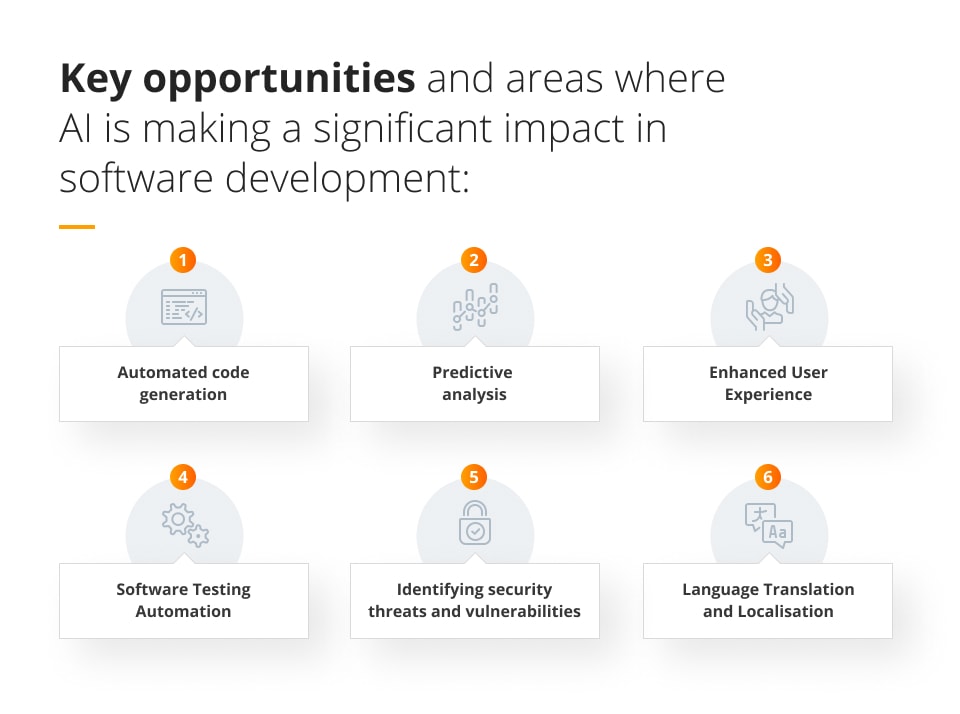
A less-discussed challenge: is AI generated code (from tools like GitHub Copilot) secure and maintainable in the long term?
As development teams adopt powerful tools for faster coding, they create potential technical debt and security vulnerabilities that may only surface months or years later.
Sustainability considerations
High energy consumption and carbon emissions of large models echo concerns raised in BFI and CoSTAR work. Greener architectures and regional data centre choices matter increasingly for UK media organisations with sustainability commitments.
Future Processing approaches these problems through discovery and architecture review, cloud cost optimisation, secure MLOps pipelines, and ongoing managed services tailored to media sector requirements.

£1B+ in bookings for the UK’s largest independent broadcaster with a new ad management platform
Challenge #5: Ethical and regulatory compliance in the UK
UK media players must balance innovation with ethics and regulation. Ad-hoc experimentation is no longer enough – structured governance has become essential.
The EU AI Act creates extra-territorial requirements affecting UK media companies distributing content into EU markets. Transparency and deepfake-labelling rules apply regardless of whether you’re headquartered in London or Manchester.
AI readiness audits across editorial, technical, and legal functions should map where AI is already in use – transcription, colour grading, recommendations – and assess risks for each application.
Governance area
Key components
- AI policies
Acceptable use definitions, prohibited applications, approval workflows
- Editorial guidelines
When and how to disclose AI assistance, quality thresholds
- Risk registers
Documented risks with owners, mitigations, and review schedules
- Incident response
Escalation paths for AI failures, public communication protocols
- Labelling rules
Clear standards for marking AI generated content for UK audiences
The road ahead for UK media
The main AI challenges facing UK media – data fragmentation, implementation risks, integration complexity, technical foundations, and regulatory compliance – aren’t going away. But doing nothing is riskier than careful action.
Competitors, including global platforms with deep resources, are already using AI aggressively. The choice isn’t between AI and no AI, but between strategic AI adoption and being disrupted by those who move faster.
With responsible, well-governed deployment and the right partners, Artificial Intelligence can strengthen UK media’s public-interest role, creativity, and commercial resilience. The benefits will flow to organisations that focus on solving specific business problems – analytics, operations, distribution – rather than chasing generative content creation headlines.
Over the next 2–5 years, the gap between AI-enabled and AI-hesitant media organisations will widen. The technology and practice will mature, regulation will crystallise, and audience expectations will rise.
The organisations that start making concrete, low-risk moves now – building data foundations, establishing governance, running controlled pilots with proper human control – will be positioned to scale when the tools, costs, and confidence align.
Get recommendations on how AI can be applied within your organisation.
Explore data-based opportunities to gain a competitive advantage.


